A free morning tea event!
Community Events
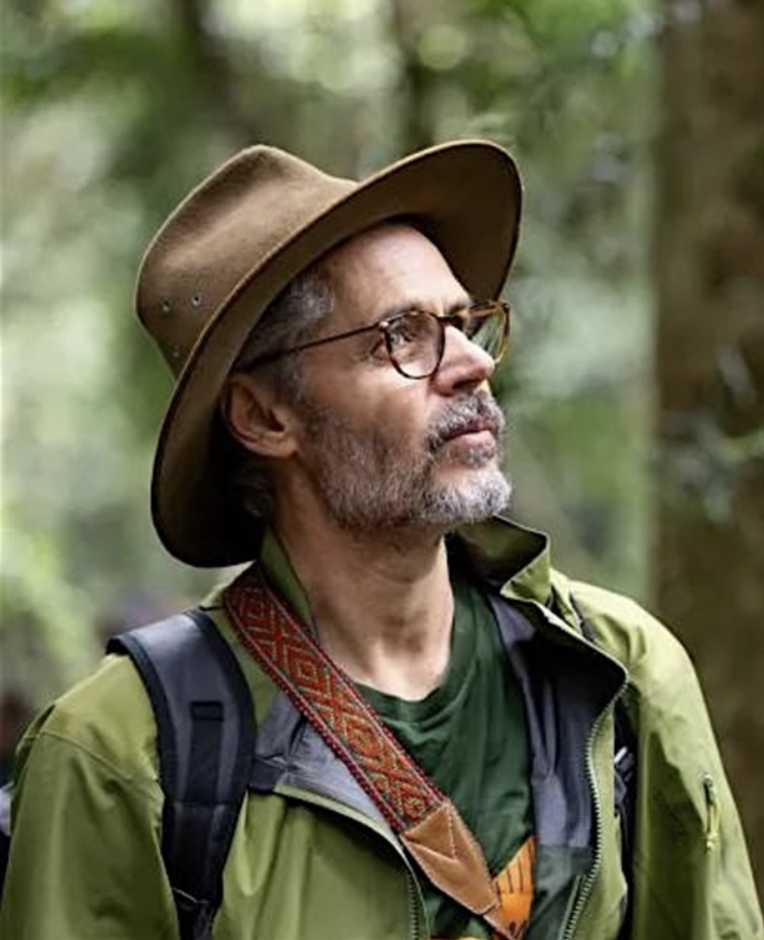
Andrew Turbill - “The Bird Guy”
Whispers of Wilderness brings its community series to Coffs Harbour's Nature Discovery Centre on 23 May.
The Whispers of Wilderness community program is well into its stride, and if the recent Toormina event is any guide, there is still much to look forward to.
The program began as a locally made short film, produced by the NSW National Parks Association NSW Coffs Coast Branch with funding from the City of Coffs Harbour Environmental Levy, that brought together Traditional Owners, marine scientists, conservationists and local business voices to reflect on this remarkable stretch of coast. After its premiere at the Jetty Theatre last year and a Whispers 2 gathering at Jetty Theatre in April, the program is now rolling out a season of free community events across the region, each screening the film and each featuring expert speakers who bring the landscape to life.
The second event in the series, held at the Toormina Community Centre on Saturday 2 May, drew an engaged crowd and two speakers who delivered, between them, a deep-time view of the world we inhabit.
Wildlife naturalist and environmental educator Andrew Turbill, known to many on the north coast as "Andrew the bird guy”, took the audience back more than 40 million years, to a time when the landmass of Australia was still separating from Antarctica. The rainforests that covered much of the continent at that time, he explained, have been effectively isolated from all other rainforests on Earth ever since. The ancient Gondwanan forest found in Dorrigo National Park today has had no contact with the Amazon for longer than our minds can comfortably hold. These are among the oldest flowering plant communities on the planet, living remnants of a world before the world we know.
Andrew also traced the origins of something we hear every morning: birdsong. When Australia drifted north, it carried with it the early ancestors of the world's first songbirds, the lyrebirds and bowerbirds whose descendants still haunt our local forests. It was from this original Gondwanan stock, thriving in Australian rainforests, that all other continents eventually came to have songbirds of their own. As Australia dried out over the last ten million years and became increasingly hostile to fire-vulnerable rainforest, it was only the moist refuge of the great eastern escarpment, the very ridge that defines our hinterland, that allowed these ancient forests to persist into modern times.
Professor Kirsten Benkendorff, marine biologist at the National Marine Science Centre at Southern Cross University, turned the audience's attention to the sea, and to a marine park that many locals know by name but perhaps not fully by nature. The Solitary Islands Marine Park was the first marine park established in NSW and remains the third largest marine protected area in the state, spanning a hundred kilometres of coastline. Its remarkable richness comes from a meeting of worlds: warm water carried south by the East Australian Current supports around 100 species of coral and an increasing number of tropical fish, while cooler temperate communities, including kelp forests near the northern limit of their range, face growing pressure from ocean warming.
Professor Benkendorff noted that just 12% of the park is fully protected in sanctuary zones, with the remainder open to a range of uses including commercial fishing. She also highlighted the park's fifteen estuaries, home to oyster reef, mangrove, seagrass and saltmarsh communities that stabilise shorelines and provide breeding habitat for fish, but which are declining across much of NSW. The health of this ocean environment, she reminded the room, is inseparable from what happens on land: the sea and the catchment are connected, and what we do upstream eventually finds its way to the coast.
Together, the two speakers offered something unique, a reminder that the landscape around us is not simply beautiful, but ancient, interconnected and irreplaceable in ways that deserve both wonder and care.
Alongside the community events, Stage Two of the Whispers program has produced a beautiful suite of nature-inspired resources now being distributed free of charge across the Coffs Coast. A colouring book illustrated by Lisa Foote, postcards and bookmarks by local artist Faye Owner, and a jigsaw puzzle designed by Jess Harwood are making their way to schools, preschools, aged care facilities, hospital wards, libraries and not-for-profit community groups throughout the region, places where a moment of calm and connection with nature can genuinely matter. Community organisations interested in the Whispers Resources are welcome to get in touch directly at coffs@npansw.org.au.
The next event in the Whispers of Wilderness series offers a different and equally important perspective. On Saturday 23 May from 9:30 AM to 12:30 PM, the program comes to the Nature Discovery Centre at the Botanic Garden in Coffs Harbour for Voices of our Coast — a free morning in the company of two highly respected Gumbaynggirr community members, Uncle Micklo Jarrett and Aunty Yvette Pacey. Attendees will have the chance to learn about Coffs Coast national parks and reserves, and the meaning of treading lightly and caring for Country, while enjoying a cuppa, light refreshments, and a screening of the Whispers of Wilderness film. There will be free resources to take home, and a lucky door prize.
No booking is required. The event is funded by the City of Coffs Harbour Environmental Levy and delivered by the NPA NSW Coffs Coast Branch.
For more information, visit www.npanswcoffscoast.org or email coffs@npansw.org.au.
